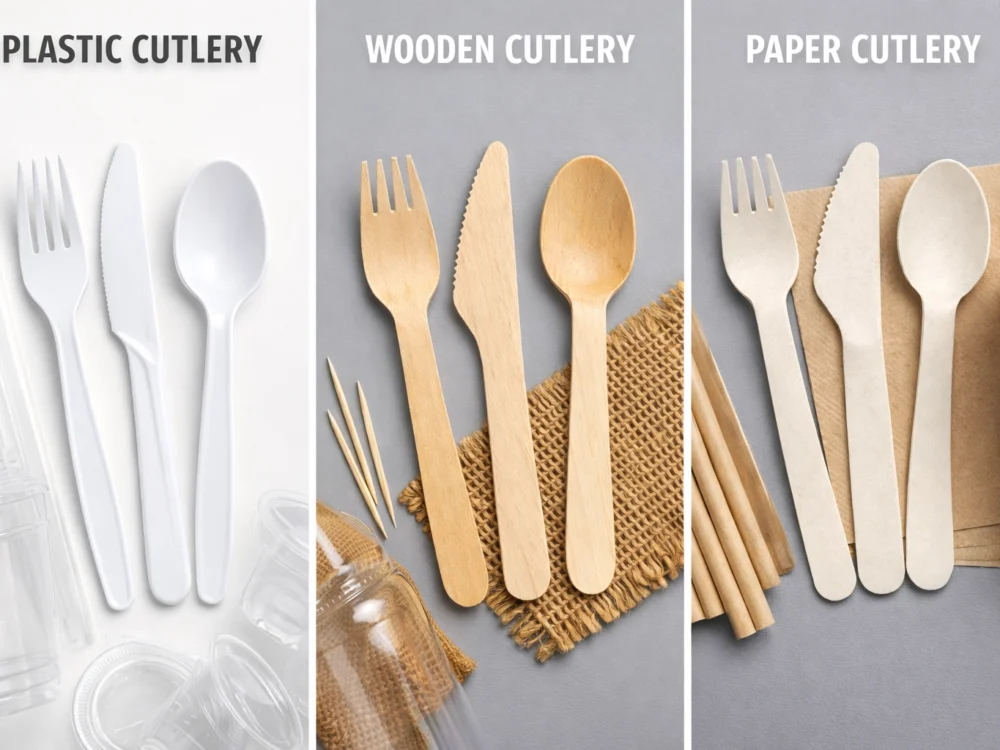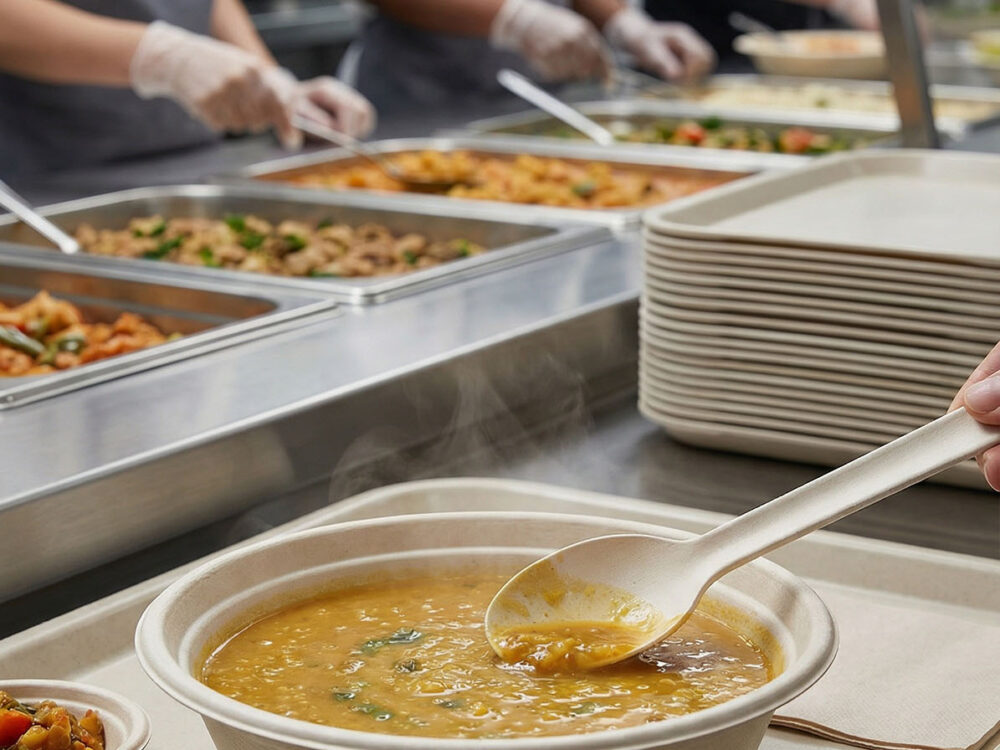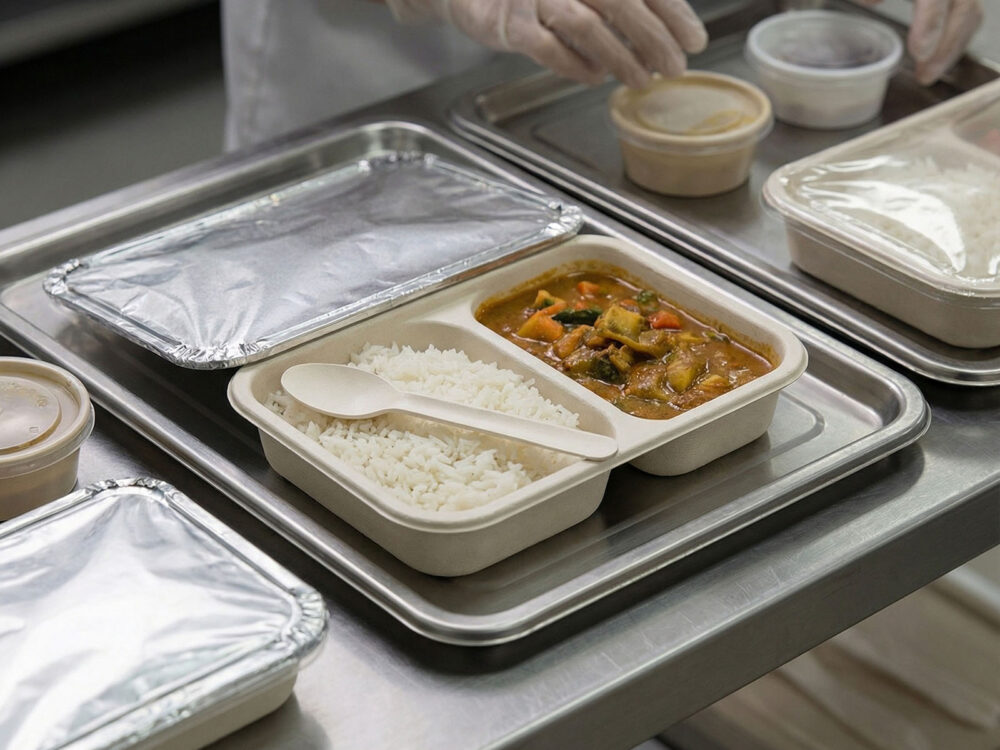
Disposable cutlery feels tiny, but the waste footprint isn’t. A fork used for 8 minutes can stay in landfills and oceans for decades, and when it breaks down, it turns into microplastics that don’t really go away.
The plastic cutlery problem is part of a much larger plastic waste crisis
Globally, plastic waste has more than doubled since 2000, reaching 353 million tonnes in 2019, and only ~9% gets recycled after losses are considered.
Cutlery is especially problematic because it’s small, lightweight, often food-soiled, and usually not collected or sorted efficiently even where recycling exists.
Many governments have started acting because these “small items” show up everywhere. The EU’s Single-Use Plastics Directive explicitly targets items like plastic cutlery and plates among the most common litter categories. India also prohibited identified single-use plastic items from 1 July 2022 under its plastic waste rules amendments.
How much plastic is wasted from disposable cutlery?
Exact counts vary by country and source, but even conservative estimates are huge. Some US-focused estimates put plastic utensils wasted at tens of billions per year.
Now imagine the global picture: takeaways, catering, offices, events, food delivery, rail/air travel.
A practical way to communicate this (without overclaiming) is by showing the math clearly:
Average weight of a lightweight plastic utensil is often around 2–3 grams per piece (many product specs fall in this range).
A “set” (spoon + fork + knife) can easily be 6–9 grams of plastic.
Multiply by daily orders, monthly events, or annual catering volume, and you get plastic waste that’s shockingly large for such a “small” item.
Simple example:
If a mid-sized food business uses 10,000 sets/month, that’s roughly 60–90 kg of plastic/month, and 720–1,080 kg/year from cutlery alone (not counting packaging).
“Okay, switch to wooden cutlery then?” Not so fast
Wood is often seen as automatically eco-friendly because it “comes from trees” and can biodegrade. But for single-use wooden cutlery, sustainability depends heavily on sourcing, processing, and end-of-life.
Here’s the less-talked-about part:
Wooden cutlery needs harvesting, drying, cutting, heat treatment, and often packaging to keep it hygienic.
If sourcing isn’t certified and supply chains aren’t transparent, you risk pushing demand that encourages poor forestry practices.
The best public guidance here is: compare materials using life-cycle thinking, not vibes. UNEP has specifically published work comparing single-use plastic tableware with alternatives and recommends decisions based on lifecycle performance and real disposal systems.